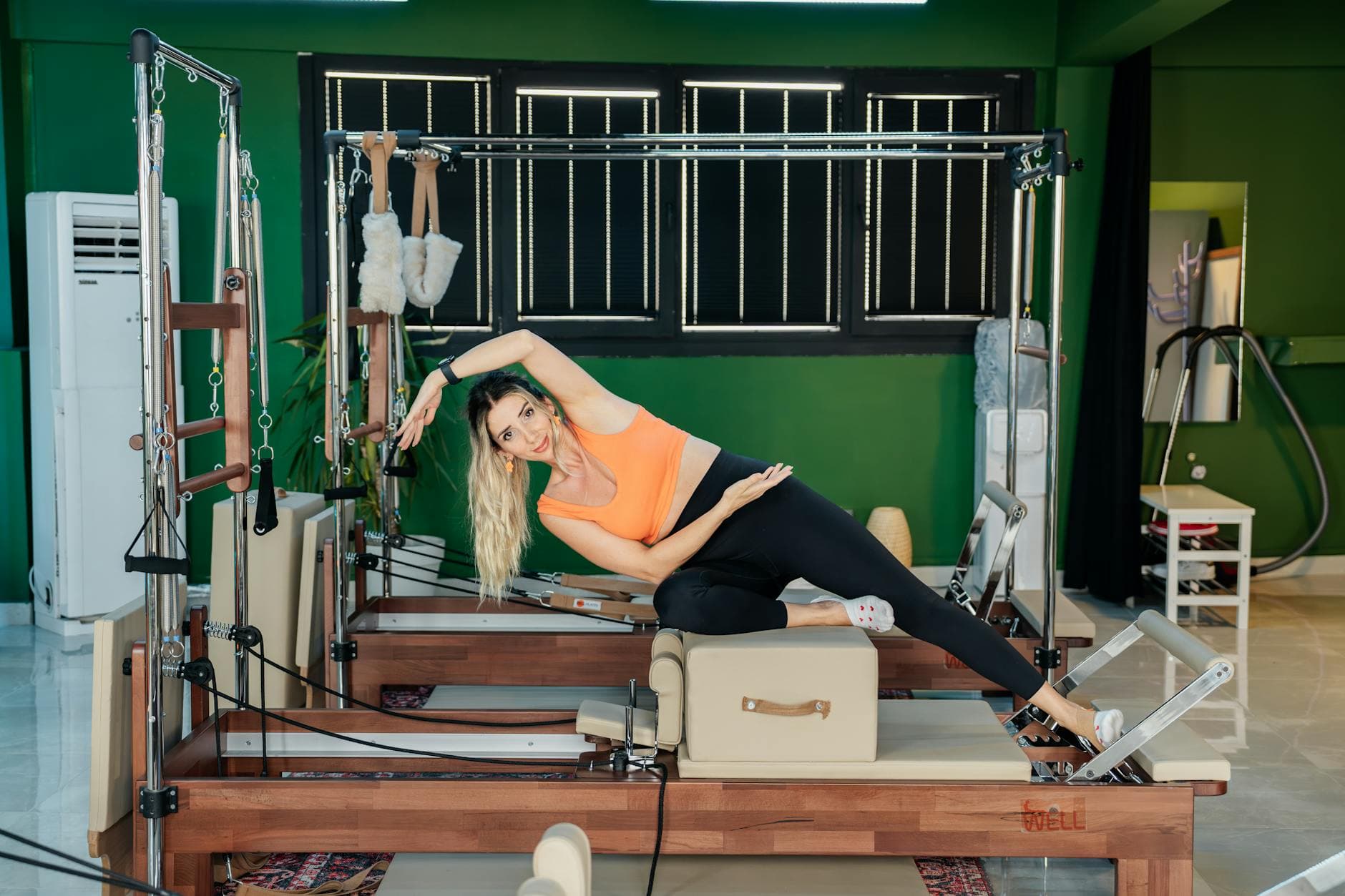
Picture this: You’re standing in your living room, maybe feeling a little stiff after a long day, or perhaps frustrated with the same old workout routine that just isn't hitting the spot anymore. You’ve tried various exercises, watched countless videos, but something feels missing. You crave something effective, something that truly builds strength and flexibility without punishing your joints. Honestly, I’ve been there more times than I can count. That’s precisely why I want to talk to you about wall pilates exercises. This isn't just another fitness fad; it’s a brilliant, low-impact way to transform your body, and it might just be the most underrated tool in your home workout arsenal.
Why the Wall? Unlocking a New Dimension of Pilates
Beyond the Mat: The Unique Support and Challenge
Most people think of Pilates as something you do on a mat, or maybe with fancy reformers. But here’s the thing: introducing a wall changes everything. It offers immediate feedback on your alignment, which is crucial for maximizing every movement and preventing injury. Think of it as your silent, ever-present coach, constantly reminding you where your spine should be, where your hips are stacking, and how deep you're truly engaging your core. This isn't just about leaning on something; it's about using that fixed point to create resistance, leverage, and a deeper understanding of your own body.
I used to think the wall was just for stretching, a simple prop. Boy, was I wrong. The wall provides stability that lets you focus intensely on muscle engagement rather than balance. For example, if you're working on a single-leg exercise, pressing your back or foot against the wall frees up your mind to concentrate entirely on the glute or hamstring, rather than wobbling around. It's a game-changer for really isolating and strengthening those deeper muscles.
Core Principles, Amplified by the Wall
Pilates, at its heart, is all about core strength, precision, control, breath, concentration, and flow. When you bring the wall into the equation, these principles don't just remain; they become amplified. The fixed nature of the wall forces you to be incredibly precise. There’s no cheating your way through a movement when your back is flat against a wall; every inch of your spine is accounted for. This heightened awareness translates into better form, which means more effective workouts and a lower risk of strain. It's truly a smarter way to move.
The controlled resistance the wall provides also deepens the challenge. You can push against it, slide along it, or use it to assist a stretch, all of which demand intense engagement of your smaller stabilizing muscles. This is where pilates for core strength truly shines, offering a full body pilates workout that’s both gentle and incredibly powerful. The beauty of these pilates wall exercises is that they meet you where you are, whether you're a complete beginner or a seasoned pro looking for a new challenge.
My Own Journey: A Skeptic Converted
I'll be real with you, when I first heard about "wall pilates exercises," my immediate thought was, "Is this just for people who can't do regular Pilates?" I considered myself fairly strong, someone who could handle a tough mat workout. But a few years back, after a minor back tweak from lifting, I needed something that offered support while rebuilding my foundation. A friend, a seasoned physical therapist, suggested I try a few pilates wall exercises.
My first session involved simple wall slides and pelvic tilts. I was shocked. The immediate feedback from the wall highlighted imbalances I never knew I had. My core, which I thought was solid, felt challenged in entirely new ways. The wall forced me to slow down, to feel every muscle fiber activate. Within weeks, my back felt stronger, my posture improved, and I found a newfound precision in my other workouts. It was a humbling, yet incredibly rewarding experience. This one surprised me, and it fundamentally changed how I approach body movement.
Essential Wall Pilates Exercises for Beginners (and Beyond)
Foundation First: Getting Your Setup Right
Before you jump into any wall pilates routine, let's talk setup. You need a clear section of wall, preferably one without too many distracting pictures or shelves. Wear comfortable clothing that allows for full range of motion. You don't need shoes for most of these; bare feet often give you better grip and proprioception. Most importantly, listen to your body. Pilates is about control, not pain. If something hurts, modify or stop.
Always start with a gentle warm-up. A few arm circles, some gentle spinal twists, maybe a few cat-cow movements on the floor. Get your blood flowing and your joints ready. This isn't just advice; it's a non-negotiable step to ensure you get the most out of your wall pilates workout without risking injury.
Core Powerhouses: Building Stability Against the Wall
These exercises are fantastic for building deep core strength and improving spinal mobility. They're foundational wall pilates for beginners, but effective for everyone.
Wall Roll Down
Stand with your back flat against the wall, feet hip-width apart, about a foot away from the wall. Your heels, sacrum, and the back of your head should ideally touch the wall. Take a deep breath. As you exhale, imagine peeling your spine off the wall, one vertebra at a time, starting from your head. Let your arms hang heavy. Keep your abs pulled in. Go as far down as you comfortably can, feeling the stretch in your hamstrings and spine. Inhale at the bottom, then slowly restack your spine against the wall on the exhale, pressing each vertebra back into place. This is phenomenal for Mayo Clinic research on wall pilates exercises showing improved spinal flexibility.
Pelvic Tilts with Wall Press
Lie on your back with your feet flat on the floor, knees bent, and your tailbone about 6-12 inches from the wall. Press your feet flat against the wall, hip-width apart. Ensure your lower back has a natural curve. Inhale. As you exhale, gently press your lower back into the floor, flattening that natural curve, engaging your deep core muscles. You should feel your tailbone lift slightly off the floor. Inhale to release. This simple movement is a cornerstone of pilates for core strength and teaches you fundamental pelvic control.
Wall Plank
Stand facing the wall, about arm's length away. Place your forearms on the wall, shoulder-width apart, hands flat. Step your feet back until your body forms a straight line from head to heels. Engage your core, glutes, and quadriceps. Imagine pressing the wall away from you with your forearms. Hold for 30-60 seconds. This variation is easier on the wrists and shoulders than a floor plank, making it excellent for building foundational strength before progressing to the floor.
Leg & Glute Sculptors: Leveraging Wall Resistance
These next bodyweight muscle building exercises use the wall to provide resistance and support, targeting your lower body with precision.
Wall Squat
Stand with your back against the wall, feet shoulder-width apart, about 1-2 feet away from the wall. Slowly slide down the wall until your knees are bent at a 90-degree angle, as if sitting in an invisible chair. Ensure your knees are directly over your ankles, not extending past your toes. Press your entire back into the wall, engaging your core and quads. Hold for 30-60 seconds. This static hold builds incredible endurance in your legs and glutes, and it's a staple in any effective wall pilates routine.
Wall Bridge
Lie on your back with your feet flat against the wall, knees bent at a 90-degree angle, hip-width apart. Your hips should be about 6-12 inches from the wall. Inhale. As you exhale, press your feet into the wall and lift your hips off the floor, articulating your spine one vertebra at a time. Squeeze your glutes at the top, ensuring a straight line from your shoulders to your knees. Inhale to hold, then exhale to slowly lower back down. This is fantastic for strengthening your glutes, hamstrings, and lower back, offering significant National Institutes of Health research on wall pilates exercises to improve posterior chain strength.
Leg Slides
Lie on your back with one foot flat on the wall, knee bent at 90 degrees, and the other leg extended on the floor. Keep your hips stable and your core engaged. Slowly slide the extended leg up the wall until it's straight, then slowly slide it back down. Keep your lower back pressed into the floor throughout the movement. This exercise truly challenges your core stability and leg control, making it a powerful addition to your wall pilates routine for flexibility and strength.
Full Body Flow: A Sample Wall Pilates Routine
Designing Your Wall Pilates Workout
A good wall pilates workout isn't just a random collection of exercises. It's a thoughtful sequence that warms you up, challenges your entire body, and then cools you down. Think about balance: some exercises for core, some for legs, some for upper body or flexibility. The wall provides unique opportunities for all of these.
For a beginner, I always recommend starting with 3-5 exercises, performing 8-12 repetitions or holding for 30 seconds, and doing 2-3 sets. As you get stronger, you can increase reps, sets, or hold times, and incorporate more complex movements. Remember, consistency beats intensity every single time.
My Go-To Wall Pilates Sequence
Here’s a simple yet effective wall pilates routine that hits all the major muscle groups and focuses on those core Pilates principles.
Warm-Up (5 minutes)
- Wall Angels: Stand with your back, head, and arms (elbows bent at 90 degrees, palms facing forward) against the wall. Slowly slide your arms up and down, like making a snow angel, keeping everything pressed to the wall. Do 10-15 reps.
- Wall Cat-Cow: Stand facing the wall, hands shoulder-width apart on the wall at chest height. Step back until your arms are straight. Arch your back (cow), then round it (cat), using the wall for support. 5-8 reps.
The Flow (20-30 minutes)
- Wall Roll Down: 8-10 reps, focusing on spinal articulation.
- Pelvic Tilts with Wall Press: 10-12 reps, really finding that deep core connection.
- Wall Squat: Hold for 45 seconds, 2 sets.
- Wall Bridge: 10-12 reps, feeling those glutes activate.
- Single Leg Slides (each leg): 8-10 reps per leg, maintaining a stable pelvis.
- Wall Plank: Hold for 45-60 seconds, 2 sets.
- Wall Push-Ups: Stand facing the wall, hands shoulder-width apart at chest height. Lean into the wall, bending your elbows, then push back. 10-15 reps, focusing on shoulder stability.
Cool-Down (5 minutes)
- Wall Hamstring Stretch: Lie on your back, extend one leg straight up the wall, keeping the other leg bent on the floor. Hold for 30-60 seconds per leg.
- Wall Chest Stretch: Stand facing a corner or doorway. Place one forearm on each side of the corner/doorframe, step forward gently, feeling a stretch across your chest. Hold for 30 seconds.
Progression and Modification: Making It Your Own
You might be wondering how to make these wall pilates exercises harder or easier. It's all about adjusting your distance from the wall or the intensity of your press. For instance, to make the Wall Squat harder, try lifting one heel slightly off the floor. To make it easier, don't go down as deep. For the Wall Plank, stepping your feet further back increases the intensity. Always prioritize form over depth or duration. The goal is controlled, mindful movement, not just ticking off reps. This adaptability is what makes a World Health Organization research on wall pilates exercises so accessible to various fitness levels.
The Hidden Benefits of Wall Pilates: More Than Just a Workout
Posture, Pain Relief, and Realignment
Beyond the immediate burn, the long-term benefits of regular wall pilates exercises are profound. Because the wall provides such clear feedback on your alignment, you naturally start to correct postural imbalances. Think about the last time you slouched at your desk; wall Pilates trains your body to find and hold that ideal, upright position. This isn't just about looking better; it's about alleviating chronic pain, especially in the back and neck, which often stem from poor posture. For me, it was a crucial part of managing my lower back discomfort.
The gentle, controlled movements also help decompress the spine and improve joint mobility. It’s a low impact workout that provides incredible relief for those with joint issues or recovering from injuries, strengthening the supporting muscles without putting undue stress on the joints themselves. This focus on alignment and support is key for lasting relief and improved body function.
Mental Clarity and Mind-Body Connection
Pilates demands concentration. When you're pressing against a wall, focusing on every vertebra, every muscle engagement, your mind has to be fully present. This isn't just physical exercise; it's a moving meditation. It helps quiet the noise of daily life and brings you into the moment. I've found that my wall pilates routine is often the most grounding part of my day, helping me clear my head and reduce stress.
This deep mind-body connection also means you become more attuned to your body's signals. You learn to differentiate between good muscle engagement and harmful strain. This awareness extends beyond your workout, making you more mindful of your posture and movements throughout your day. It’s a holistic approach to wellness.
Accessibility and Convenience: Your Home Gym Solution
One of the biggest advantages of wall pilates exercises? You don't need any special equipment or a gym membership. All you need is a wall and a few square feet of space. This makes it incredibly accessible for anyone, regardless of their budget or schedule. You can literally roll out of bed and get a fantastic pilates at home workout in minutes. No excuses, just results.
This convenience means consistency is easier to achieve. A 20-minute wall Pilates session in your living room is far more likely to happen than a 60-minute trek to the gym. And consistent, even short, workouts are what truly drive progress and deliver those incredible wall pilates benefits.
Common Mistakes to Avoid (and How to Fix Them)
The "Pushing Too Hard" Trap
It’s tempting, especially if you’re used to high-intensity workouts, to try and muscle your way through Pilates. But this is where people often go wrong. Pilates, particularly wall Pilates, isn't about brute force; it's about controlled, precise movements. Pushing too hard can lead to tension in your neck and shoulders, and it prevents you from engaging your deep core muscles effectively. Instead of straining, focus on the quality of the movement. Slow down. Think about drawing your belly button towards your spine and maintaining a consistent breath.
Forgetting Your Breath: The Pilates Powerhouse
The breath is the engine of Pilates. It helps you engage your core, energize your movements, and release tension. Many beginners hold their breath or breathe shallowly, which limits the effectiveness of the exercise. In Pilates, we typically inhale to prepare and exhale during the effort phase of the movement. For example, exhale as you roll down the wall, or as you lift your hips in a bridge. This coordinated breathing is not just a suggestion; it's an integral part of the pilates for core strength philosophy. Practice makes perfect here.
Ignoring Your Body's Signals
Listen, your body talks to you. Sometimes it whispers, sometimes it shouts. When you're doing wall pilates exercises, pay attention to those whispers. If you feel a sharp pain, stop immediately. If something feels like a strain rather than a stretch or muscle engagement, adjust your position or reduce the range of motion. There's no medal for pushing through pain; only potential injury. Pilates is about building a healthier, stronger body, and that starts with respecting its limits and working within your comfort zone. It's a journey, not a race.
So, there you have it. Wall pilates exercises aren't just a clever trick; they're a legitimate, powerful way to build strength, improve flexibility, correct posture, and deepen your mind-body connection. Whether you're a seasoned fitness enthusiast or just starting your journey, I genuinely believe adding a wall to your routine can unlock a whole new level of physical awareness and capability. Give it a try. Find a quiet spot, press against that wall, and feel the difference. Your body will thank you.