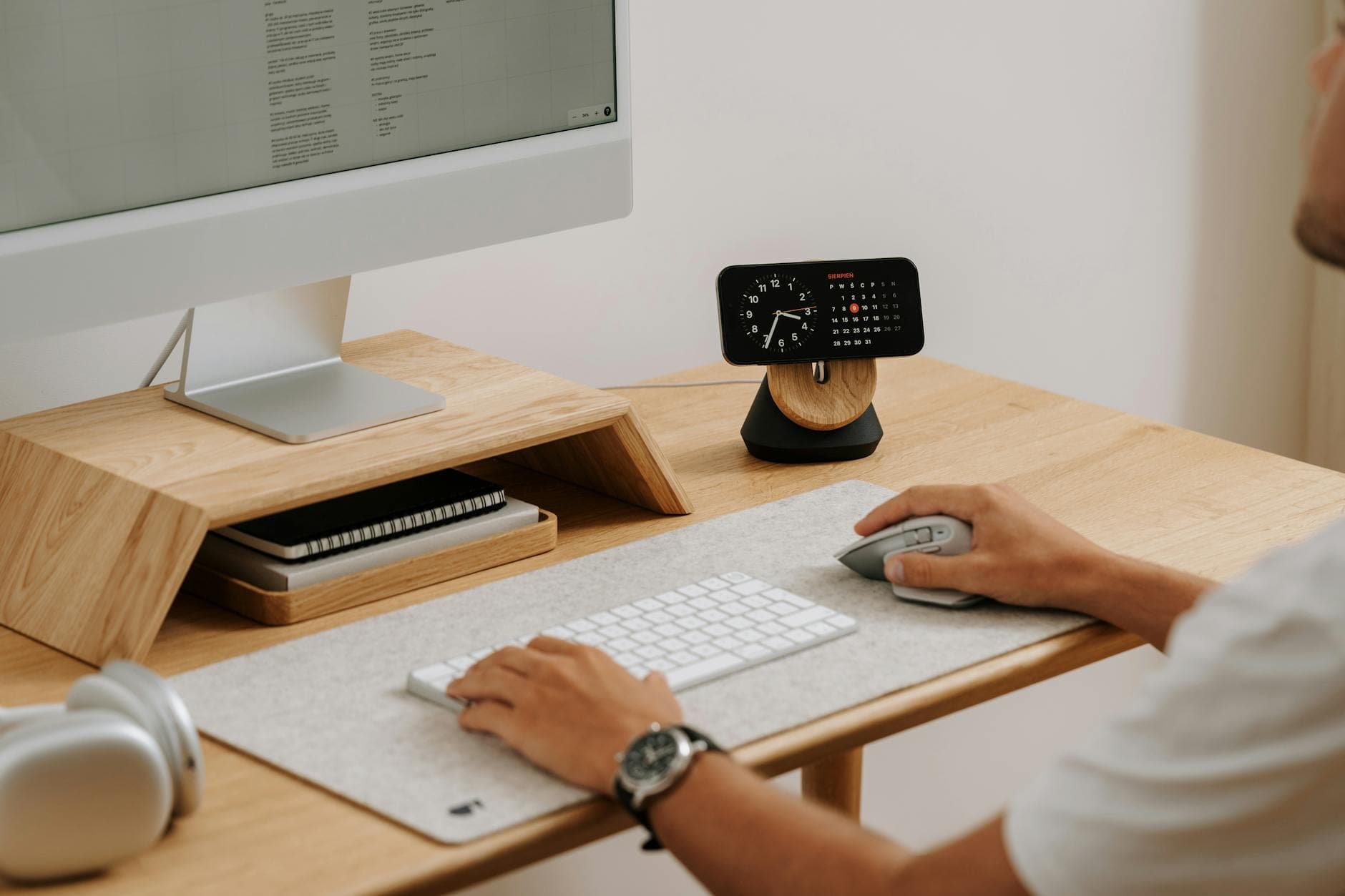
There's a common misconception I hear all the time: "I bought a standing desk, so I'm totally beating the sedentary lifestyle, right?" Look, I get it. The intention is spot on. You've made a conscious effort to escape the chair, and that's a huge step forward. But here's the thing, and I'll be real with you: simply standing still for eight hours isn't the magic bullet we all hoped for. While it's certainly better than sitting, prolonged static standing can also lead to its own set of problems, like lower back pain, foot fatigue, and reduced circulation. The true power lies not just in standing, but in movement. That's where standing desk exercises come into play, transforming your workstation from a static perch into an active hub for vitality.
You see, our bodies are designed to move, to shift, to stretch, and to engage. We weren't built to be statues, whether seated or standing. My goal here isn't to tell you to ditch your standing desk – far from it! It's to help you unlock its full potential, turning it into a tool for genuinely improving your health, boosting your energy, and making your workday feel less like a drain and more like an opportunity to feel good. Let's make that active workstation truly active.
The Truth About Your "Active" Workstation
Why Just Standing Isn't Enough
When I first got my standing desk years ago, I felt like a pioneer. I was so proud of myself for escaping the chair trap. But after a few weeks, I noticed my lower back still felt stiff, my feet ached, and my focus wasn't quite as sharp as I'd hoped. I used to think the mere act of being upright was enough to counteract hours of sitting. I was wrong.
The problem is that static standing, while burning slightly more calories than sitting, still keeps many of your muscles inactive. Your body locks into a fixed position, and the same muscles and joints bear the brunt of the load. This can impede circulation, contribute to varicose veins, and still lead to muscle imbalances. In fact, some World Health Organization research on standing desk exercises emphasizes that the key isn't just standing, but breaking up prolonged static postures with movement.
The Real Goal: Movement, Not Just Position
What we're truly aiming for is consistent, varied movement throughout the day. Think of it as creating a dynamic environment for your body. This isn't about doing a full Full Body Weight Workout: Transform Your Physique Today in your cubicle; it's about integrating small, impactful movements that keep your blood flowing, muscles engaged, and joints lubricated. These little bursts of activity are the real "sedentary lifestyle solutions." They are the essence of a truly active workstation.
Moving helps prevent the stiffness and discomfort that can creep in from any static posture. It's about interrupting those long periods of stillness, whether you're sitting or standing. This approach is far more beneficial for your cardiovascular health, metabolic rate, and overall well-being.
My Own Journey: From Static Stand to Dynamic Day
I'll be real with you, I was a prime example of someone who bought into the "standing desk is enough" myth. For months, I'd stand there, tapping away at my keyboard, convinced I was doing everything right. Then came the persistent ache in my right hip and that nagging stiffness in my neck. It was a wake-up call.
This one surprised me. I realized that even though I was standing, I was still locked in. My body craved variety. It was only when I started intentionally weaving in standing desk exercises – even just simple stretches and movements every hour – that I truly began to feel the profound difference. My energy levels soared, those aches diminished, and my focus improved dramatically. It wasn't about more time standing; it was about more time moving while standing.
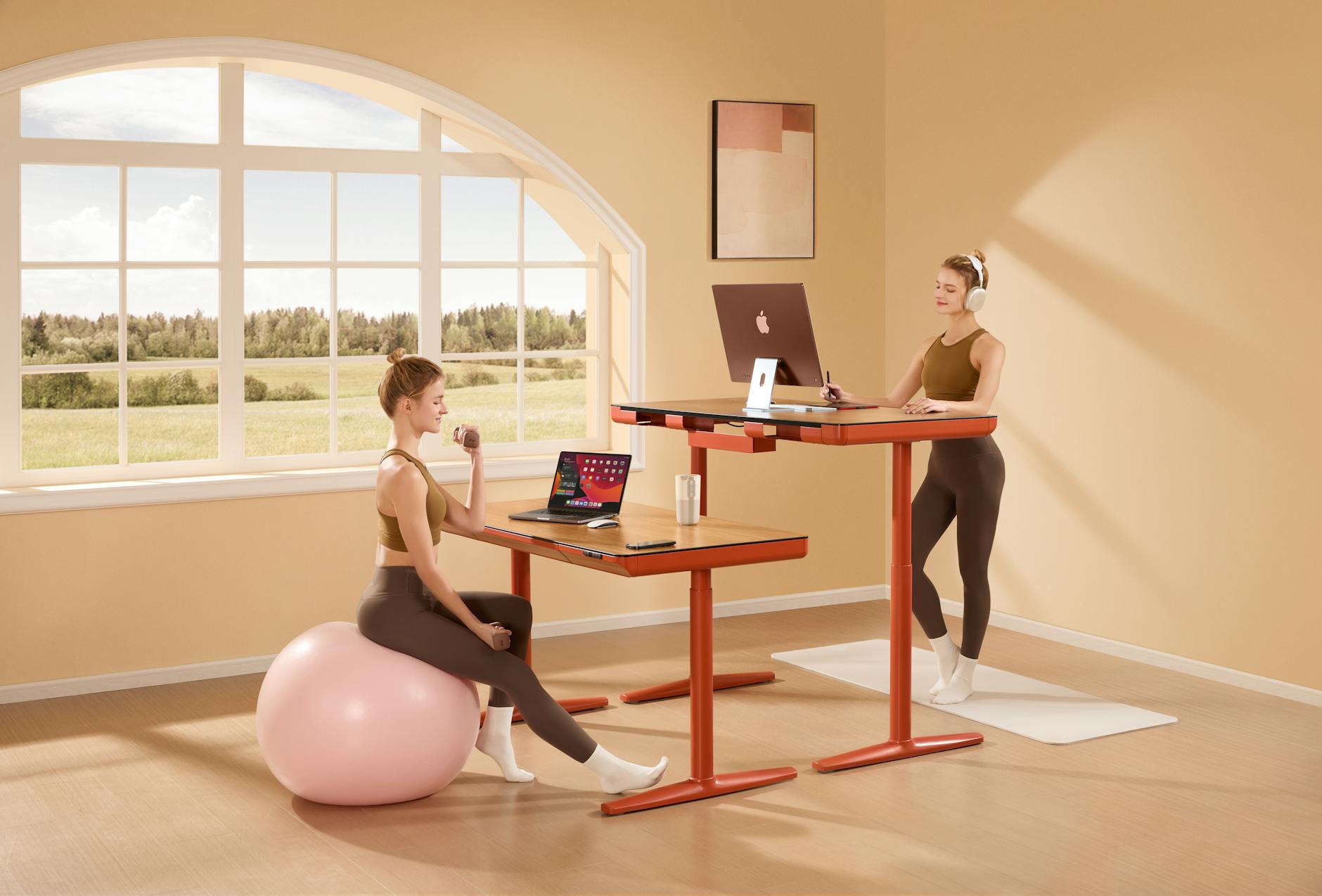
Essential Standing Desk Exercises for Your Lower Body
Grounding Your Foundation: Calves and Feet
Your feet and calves are your unsung heroes, constantly working to support you. Giving them a little love throughout the day can make a huge difference in how you feel from the ground up.
- Calf Raises: Simply lift your heels off the ground, standing on the balls of your feet, then slowly lower. Aim for 10-15 reps. This is fantastic for circulation and strengthening your lower legs.
- Ankle Circles: Lift one foot slightly off the floor and rotate your ankle clockwise, then counter-clockwise. Do 5-10 rotations in each direction per foot. This improves ankle mobility and can prevent stiffness.
- Foot Taps/Marches: Just gently tap your toes on the ground, or lift your knees slightly as if marching in place. This keeps the blood flowing and acts as a gentle energy booster.
Activating Your Powerhouse: Glutes and Quads
These large muscle groups are crucial for posture and power, but they can become dormant with prolonged standing. Waking them up is key to reducing back pain and improving overall strength.
- Glute Squeezes: Without moving your feet, simply squeeze your glutes as hard as you can, hold for 5 seconds, and release. Repeat 10-15 times. You can do this discreetly at any time. This isometric exercise effectively activates your gluteal muscles.
- Standing Lunges (Modified): Take a small step forward with one foot, keeping your back straight, and gently bend both knees slightly. Don't go deep; just enough to feel a stretch in the back leg and engagement in the front quad. Alternate legs for 5-8 reps per side. If you're looking for more ways to engage these muscles with your bodyweight, check out Bodyweight Muscle Building: Build Strength & Size at Home.
- Mini Squats: Keeping your feet shoulder-width apart, gently push your hips back and bend your knees as if you're about to sit in a chair, but only go down a few inches. Stand back up. Perform 10-15 reps. This engages your quads and glutes without needing a lot of space.
Dynamic Leg Movements to Break the Monotony
Adding dynamic movements helps with joint lubrication and overall flexibility, making you feel less stiff by the end of the day.
- Leg Swings: Hold onto your desk for support. Gently swing one leg forward and backward, then side to side. Do 5-10 swings in each direction for each leg. This really opens up the hips.
- Knee to Chest: Again, using your desk for balance, lift one knee towards your chest, gently hugging it with your hands if comfortable. Hold for a few seconds, then release. Alternate legs for 3-5 reps per side. This is a fantastic hip flexor stretch.
Upper Body and Core: Keeping Your Torso Engaged
Opening Up Your Chest and Shoulders
Slouching over a keyboard, even while standing, is a real posture killer. These standing desk stretches help counteract that hunch.
- Shoulder Rolls: Roll your shoulders forward 5-10 times, then backward 5-10 times. This releases tension in your neck and upper back.
- Chest Opener: Interlace your fingers behind your back (or grab opposite elbows if you can't interlace), gently straighten your arms, and lift them slightly away from your body. Feel the stretch across your chest. Hold for 15-20 seconds. This is excellent for improving posture.
- Overhead Reach: Clasp your hands together and extend your arms straight overhead, palms facing the ceiling. Gently lean side to side for a nice side body stretch.
Strengthening Your Core (Subtly)
Your core is the foundation of almost all movement, and keeping it engaged, even subtly, can dramatically National Institutes of Health research on standing desk exercises often points to core strength as a key component of reducing back pain. You don't need to be doing a full Core Workout at Home: Build Strength & Sculpt Your Abs at your desk, but these small actions help.
- Abdominal Bracing: Simply brace your abdominal muscles as if you're preparing for a gentle punch to the gut. Hold for 5-10 seconds, then relax. Repeat 5-10 times. It's an isometric contraction that strengthens your deep core.
- Standing Side Bends: Stand tall, place one hand on your hip, and gently reach the other arm overhead, bending to the side. Feel the stretch along your side. Alternate sides for 3-5 bends each.
Arm and Wrist Mobility
Constant typing and mouse use can lead to wrist and arm strain. These micro-movements are crucial.
- Arm Circles: Extend your arms out to the sides and make small circles forward, then backward. Increase the circle size if comfortable. Do 10-15 circles in each direction.
- Wrist Flexion/Extension: Extend one arm forward, palm down. Use your other hand to gently pull your fingers towards your body (stretching the top of your wrist), then pull them back towards your forearm (stretching the underside). Hold each for 10-15 seconds.
- Finger Stretches: Spread your fingers wide, then make a tight fist. Repeat several times. You can also gently pull each finger back individually for a deeper stretch.

The Posture Perfectors: Stretches and Ergonomics at Your Desk
Unlocking Your Spine: Back and Neck Relief
Your spine takes a beating from prolonged sitting and standing. These standing desk stretches are vital for maintaining spinal health and reducing discomfort.
- Standing Cat-Cow: Place your hands on your desk, leaning slightly forward. As you inhale, arch your back slightly and look up (cow). As you exhale, round your spine and tuck your chin (cat). Repeat 5-8 times. This is a gentle way to mobilize your entire spine.
- Neck Tilts and Rotations: Gently tilt your ear towards your shoulder, holding for 15-20 seconds. Then slowly rotate your head to look over one shoulder, then the other. Never force these movements. This can help reduce neck stiffness, a common complaint with "office exercises."
Ergonomics Beyond the Screen
It's not just about standing; it's about how you stand and interact with your workstation. You might be wondering if your setup is truly optimal. Think about the last time you adjusted your screen height after raising your desk.
- Monitor Height: Your monitor should be at eye level, so you're looking straight ahead, not craning your neck up or down.
- Keyboard and Mouse Position: Keep your elbows at a 90-degree angle, close to your body. Your wrists should be straight, not bent up or down.
- Foot Placement: Avoid locking your knees. Shift your weight from foot to foot or place one foot on a small stool or anti-fatigue mat. This is where "desk exercises standing" can really shine, as you can subtly shift and move.
Good ergonomics are your first line of defense against discomfort. They complement your standing desk exercises perfectly, ensuring you're not just moving, but moving from a good foundation.
The Power of Micro-Breaks
Honestly, this is where most people miss the boat. We tend to think if we can't do a full 10-minute workout, it's not worth it. That's simply not true. Even 60 seconds of focused movement can make a profound difference. These "office exercises" aren't about intensity; they're about consistency.
Set a timer. Every 30-60 minutes, take a micro-break. Do a few calf raises, a couple of shoulder rolls, or a quick leg swing. These small, frequent movements are far more effective than trying to squeeze in one long session and then remaining static for the rest of the day.
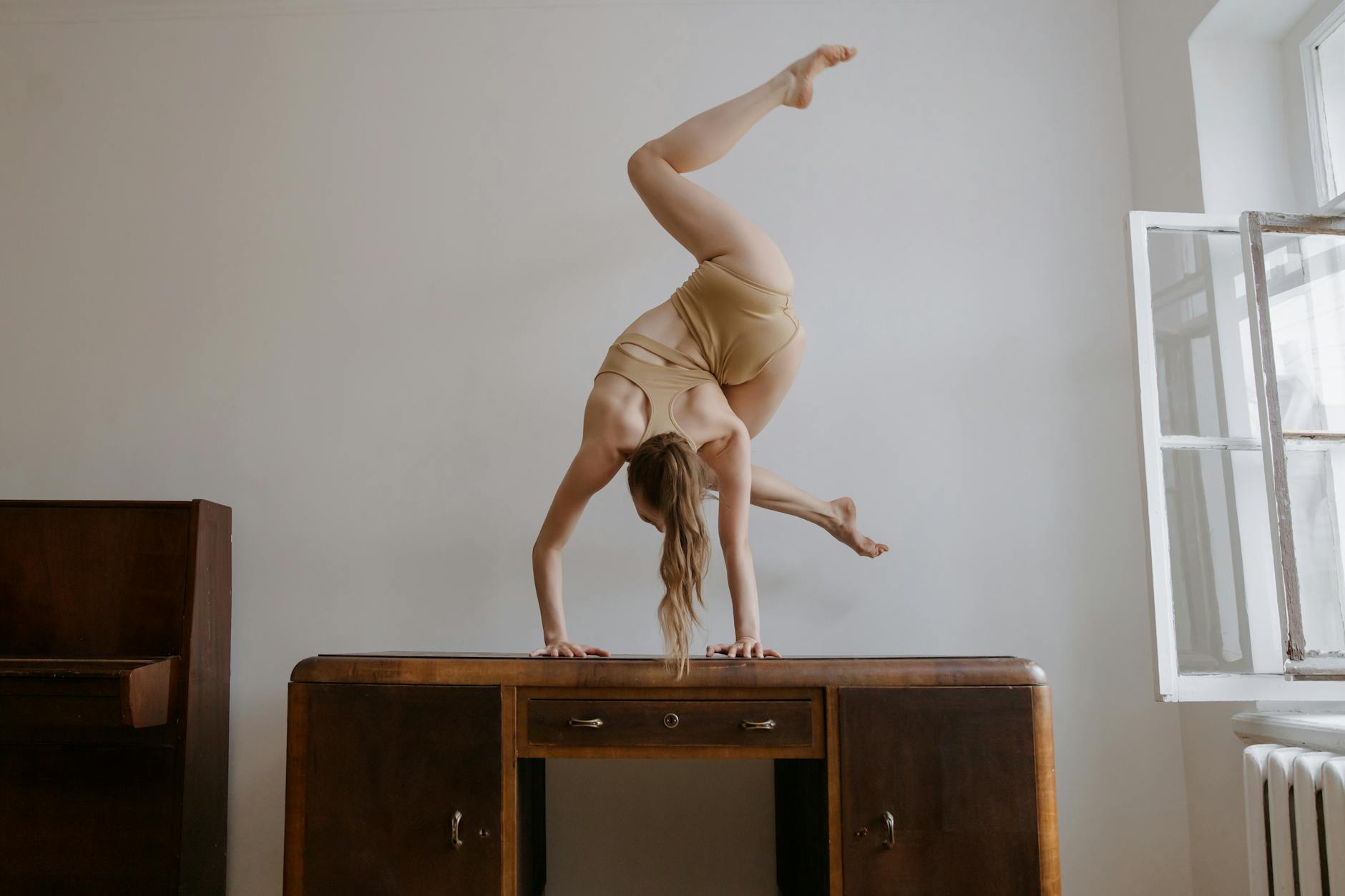
Integrating Movement into Your Workday Flow
The Pomodoro Principle for Movement
You know the Pomodoro Technique for focus? Apply that same principle to movement. Work intently for 25-45 minutes, then take a 5-minute movement break. During that break, don't just stand there; actively engage in some standing desk exercises.
For example, I set a timer on my phone – a simple one, nothing fancy – to remind me every 45 minutes to do 10 squats and 10 calf raises. That's it. Takes less than a minute. Then, on my longer breaks, I might incorporate a few more stretches or a quick walk around the office. This structured approach makes it easy to build a habit without feeling overwhelmed.
Making Meetings More Mobile
If you're in a meeting that doesn't require intense note-taking, why not walk around? If it's a quick team huddle, suggest a standing meeting. This isn't just about physical health; movement can actually boost creativity and focus during discussions. You might be wondering if it's weird, but look, it's becoming more common, and many teams find it energizing.
For phone calls, especially longer ones, turn them into "walk-and-talk" sessions. Step away from your desk, even if it's just pacing a small area. This is a fantastic way to incorporate more general movement and get those steps in without disrupting your workflow.
Building a Habit, Not a Chore
The biggest hurdle with any new routine is consistency. Start small. Don't feel like you need a Beginner Yoga YouTube: Your Free Guide to Starting At Home session every hour. Pick 2-3 standing desk exercises that feel good and are easy to remember. Do them every hour, on the hour. Once those become second nature, gradually add more. Consistency, even with small actions, trumps sporadic intensity.
Remember, the goal isn't perfection; it's progress. Every little bit of movement adds up. Mayo Clinic research on standing desk exercises often highlights the cumulative effect of small, frequent movements throughout the day as a powerful tool against the dangers of a sedentary lifestyle. Your body will thank you for it, not just today, but for years to come.
So, there you have it. Your standing desk is a fantastic tool, but it's just that – a tool. The real magic happens when you actively engage with it, turning static posture into dynamic movement. Don't just stand there; move, stretch, and invigorate your body. Start small today. Pick one or two "exercises at standing desk" to try. Feel the difference, and let that feeling motivate you to keep going. Your health, your energy, and your focus are worth every single effort.