
Picture this: You’re on a business trip, stuck in a hotel room with a tiny gym that has two broken treadmills and a set of dusty dumbbells. Or maybe you’re a parent, trying to squeeze in a workout between school runs and dinner prep, feeling guilty about leaving the house. Perhaps you’re just starting your fitness journey, a little intimidated by the big, clunky machines at the local gym. I’ve been there, honestly, in all those scenarios. For years, I chased the idea that "real" strength training had to involve heavy barbells and a dedicated gym membership. I used to think anything less wasn't going to cut it. Then, I discovered the incredible versatility and power of resistance band exercises, and it completely changed my perspective on what's possible outside of a traditional gym setting.
Here's the thing: you don't need a fancy setup to build strength, improve mobility, or even shed a few pounds. What you need is consistency, smart training, and the right tools. And for my money, few tools offer as much bang for your buck, or as much portability and adaptability, as a good set of resistance bands. This isn't just about convenience; it's about effective, scalable training that truly works.
The Unsung Hero of Your Home Gym (Or Anywhere, Really)
Look, when most people think about serious strength training, resistance bands often get relegated to warm-ups or physical therapy. I get it, I had that mindset too. But that's a huge disservice to what these simple, stretchy loops can actually achieve. They’re a fantastic piece of home fitness equipment, but their utility extends far beyond just your living room.
More Than Just a Warm-Up Tool
I’ll be real with you, for years, my resistance bands collected dust, only pulled out for glute activation before squats. What a waste! These bands provide constant tension throughout the entire range of motion, which is something free weights can't always do as effectively. Think about it: at the top of a dumbbell bicep curl, gravity isn't pulling as hard, so the muscle tension decreases. With a band, the tension often increases as you extend, forcing your muscles to work harder where they might otherwise get a break.
This unique loading pattern makes them phenomenal for building muscle endurance, improving stability, and even increasing strength. The National Institutes of Health research on resistance band exercises has shown their effectiveness in muscle activation and strength gains, often comparable to traditional weights when used correctly. It's not just about moving weight; it's about challenging your muscles in new ways.
The Core Benefits You Can't Ignore
Beyond the constant tension, the benefits of incorporating resistance band training into your routine are numerous. They're incredibly portable gym equipment, fitting into any suitcase or backpack, making them perfect for travel or even an impromptu outdoor workout. They're also incredibly safe, reducing the risk of injury compared to heavy free weights, which is a huge plus for beginners or those recovering from injury.
Another benefit is their scalability. You can easily adjust the intensity by choosing different band strengths, or by simply altering your body position. This means a single set of bands can cater to someone just starting out and an experienced lifter alike. This versatility is, in my opinion, their greatest strength.
Why They're a Game-Changer for Busy Lives
Let's face it, life gets hectic. Between work, family, and everything else, finding time for the gym can feel like a luxury. This is where resistance band workouts at home truly shine. You can literally roll out of bed and get a fantastic morning workout in minutes. No commute, no waiting for equipment, just pure, focused effort. For anyone struggling with consistency, these bands are a non-negotiable tool. They eliminate excuses and make fitness accessible, no matter how packed your schedule is.
Getting Started: Your Resistance Band Arsenal
Alright, you're convinced. You're ready to jump into the world of resistance band exercises. But where do you even begin? There are so many types and strengths of bands out there. Don't worry, I'll walk you through it.
Choosing the Right Band for You
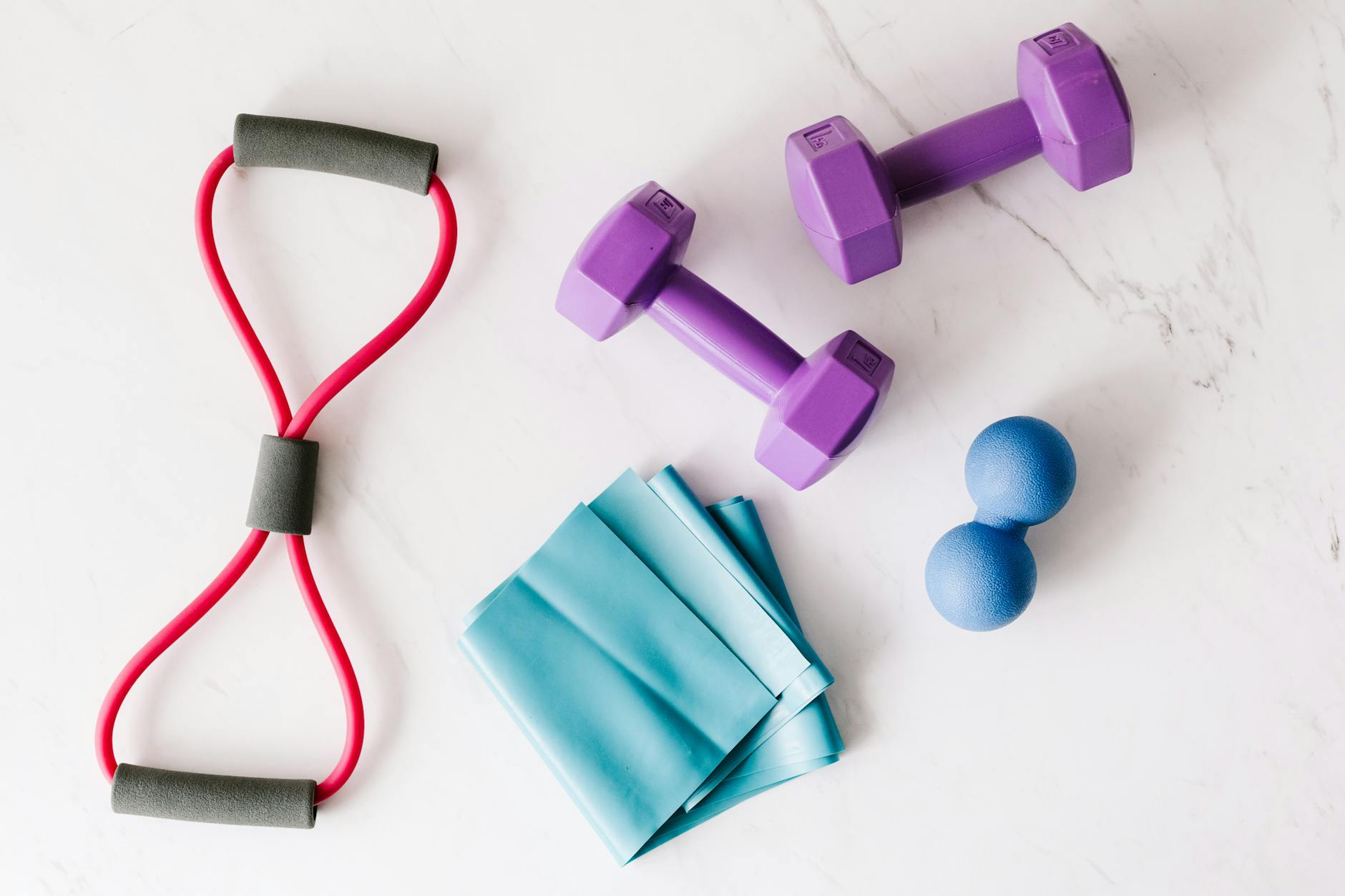
There are generally two main types of resistance bands you'll encounter: loop bands (often called "power bands" or "pull-up assist bands") and tube bands with handles. For a comprehensive full body resistance band workout, I strongly recommend getting a set of both.
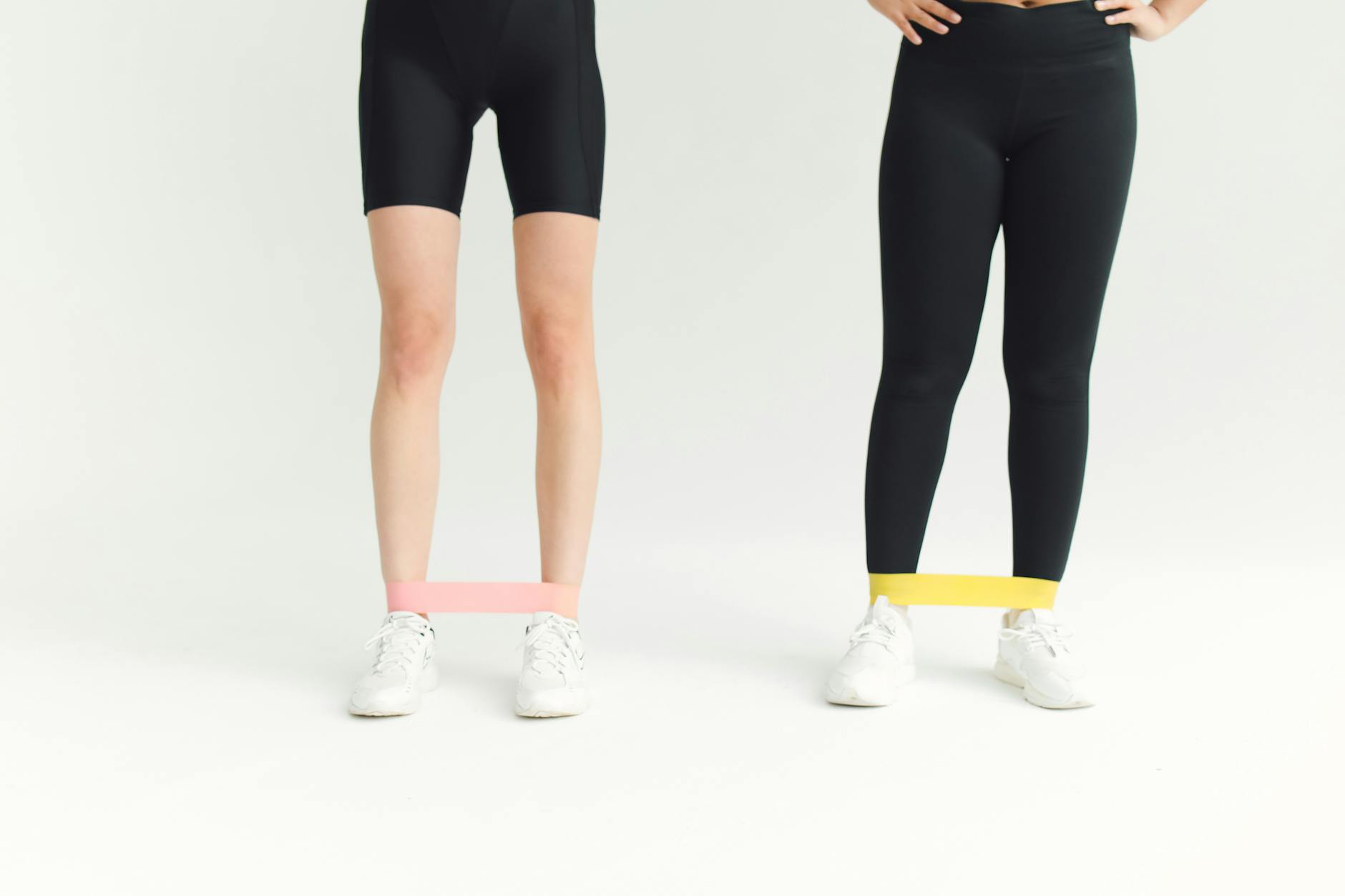
- Loop Bands: These are continuous loops, typically wider and thicker. They come in various resistances, usually color-coded. Start with a light to medium band for smaller muscle groups and a medium to heavy for larger movements like squats or deadlifts. These are fantastic for glute exercises and lower body work.
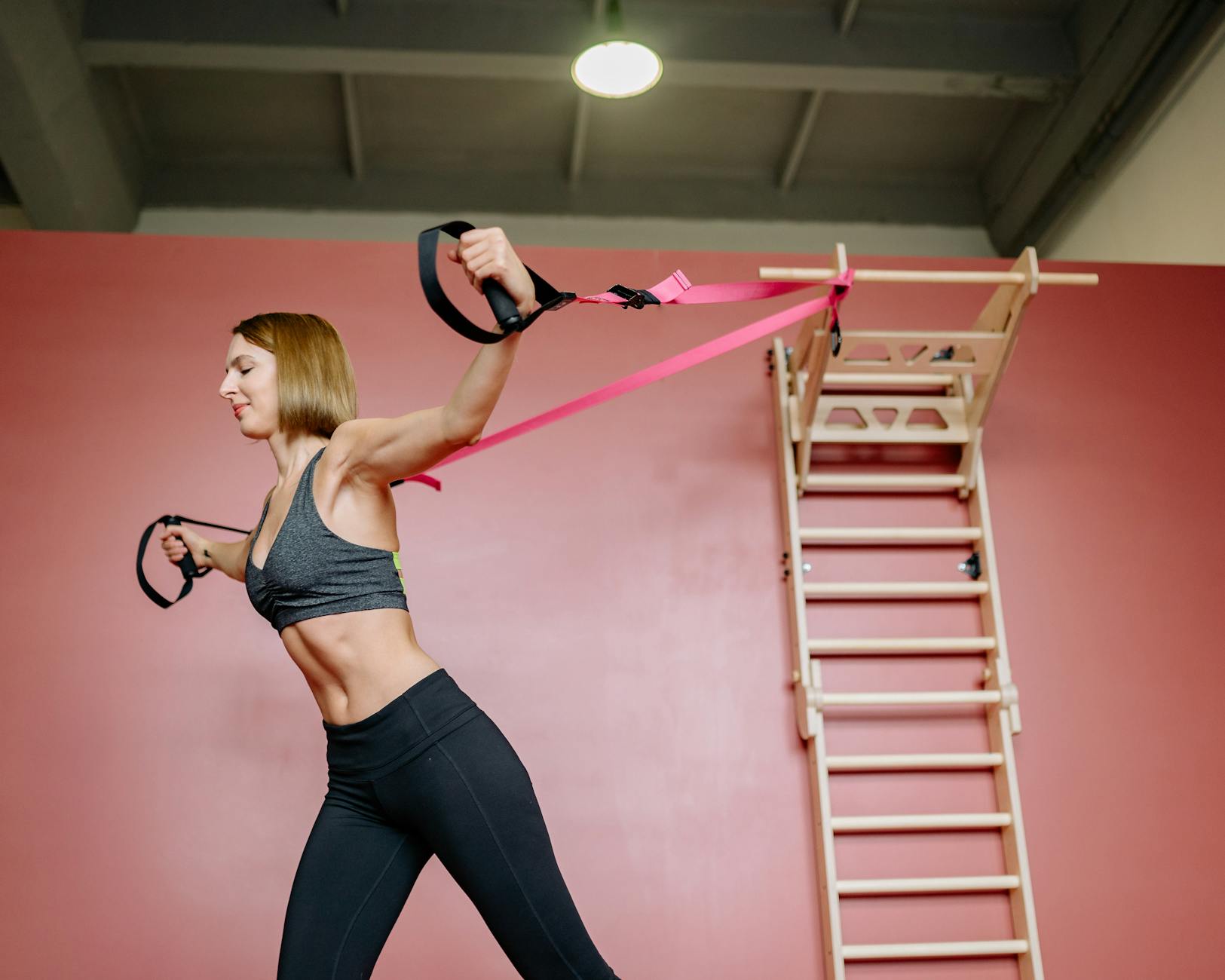
- Tube Bands with Handles: These are long tubes with handles at each end. They're excellent for exercises that mimic cable machine movements, like chest presses, rows, and bicep curls. Again, get a set with varying resistances.
Honestly, you don't need to break the bank. A good starter set of each type can be found for under $50. Invest in quality, though; cheap bands snap, and that's not fun.
How to Use Resistance Bands Safely and Effectively
Safety is paramount, always. Before every resistance band workout, inspect your bands for any nicks, tears, or worn spots. A damaged band can snap, which can be painful. When performing resistance band exercises, ensure you have a secure anchor point if needed – a sturdy door frame, a heavy piece of furniture, or even your own body weight can work.
The key to effective resistance band strength training is control. Don't just let the band snap back; control the eccentric (lowering) phase of the movement. This controlled release is where a lot of the muscle-building magic happens. Focus on smooth, deliberate movements, maintaining tension throughout.
Setting Up for Success (Attachment Points and Form)
Proper form is non-negotiable, just like with free weights. If you're using tube bands with handles, a door anchor is your best friend. It allows you to perform pressing and pulling movements from various angles. For loop bands, often you'll loop them around your feet, knees, or a stable object.
Always prioritize form over resistance. If you find yourself struggling to maintain good posture or control the movement, drop down to a lighter band. There's no ego in smart training. Your muscles will thank you, and you'll see better results in the long run.
Your Full Body Resistance Band Workout Blueprint
Alright, let's get into the nitty-gritty: actual resistance band exercises. We’re going to cover a full body resistance band workout that hits all the major muscle groups. This isn't just a random collection; this is a structured approach to building strength and endurance.
Upper Body Power: Pushing and Pulling
For your upper body, we need to cover both pushing (chest, shoulders, triceps) and pulling (back, biceps) movements. These are crucial for balanced strength and posture.
Banded Chest Press (Anchor to door)
Anchor a tube band to a sturdy door frame at chest height. Grab a handle in each hand, facing away from the door. Step forward until there's tension on the band. Press your hands straight out in front of you, squeezing your chest. Control the return. This is an excellent alternative to a push pull workout routine chest press at the gym. Aim for 3 sets of 10-15 repetitions.
Banded Rows (Loop under feet or anchor)
For rows, you have options. You can loop a tube band under your feet, stand tall, and pull the handles towards your hips, squeezing your shoulder blades together. Alternatively, anchor a band to a door at waist height, face the door, and pull the handles towards your torso. Focus on retracting your shoulder blades. Three sets of 12-18 reps will really hit your back muscles.
Lower Body Strength: Glutes, Quads, and Hamstrings
Your lower body is your foundation. Strengthening your glutes, quads, and hamstrings is vital for overall fitness, mobility, and preventing injury. These resistance band exercises are incredibly effective.
Glute Bridges with Band
Lie on your back with your knees bent, feet flat on the floor. Place a small loop band just above your knees. Drive your hips up towards the ceiling, squeezing your glutes at the top, while simultaneously pushing your knees out against the band. This is one of my absolute favorite resistance band for glutes exercises. Perform 3 sets of 15-20 reps, really feeling that burn.
Banded Squats
Stand with a loop band just above your knees. Position your feet shoulder-width apart, toes slightly out. Squat down as if sitting in a chair, pushing your knees out against the band. Keep your chest up and back straight. The band forces your glutes to engage more to prevent your knees from caving in. Three sets of 10-15 reps, focusing on depth and control.
Banded Hamstring Curls
Anchor a tube band low to a door or sturdy object. Loop the handle around one ankle. Step back to create tension. Keeping your core tight, pull your heel towards your glute, contracting your hamstring. Control the release. This is a great way to isolate the hamstrings without a machine. Try 3 sets of 12-15 reps per leg.
Core Stability and Movement
A strong core isn't just about six-pack abs; it's about stability, balance, and protecting your spine. Resistance bands are excellent for challenging your core in functional ways.
Pallof Press
Anchor a tube band at chest height to your side. Grab the handle with both hands and step away from the anchor point until there's tension. Press the band straight out in front of you, resisting the pull of the band trying to rotate your torso. This is a fantastic anti-rotation exercise for core stability. 3 sets of 8-12 presses per side.
Banded Crunches
Loop a light to medium resistance band around your feet, holding the ends in your hands. Lie on your back, knees bent. As you crunch up, pull the band towards your chest, increasing the resistance on your abdominal muscles. This added resistance can make a simple crunch much more effective. Aim for 3 sets of 15-20 reps.
Tailoring Your Resistance Band Training for Specific Goals
The beauty of resistance band training is its adaptability. Whether you're a complete beginner, looking to lose weight, or an advanced athlete needing to refine movement, there's a way to integrate bands into your routine.
Resistance Band Exercises for Beginners: Building a Foundation
If you're new to fitness, resistance bands are your best friend. They allow you to learn proper movement patterns with less risk of injury than heavy weights. Start with lighter bands and focus intensely on form. Don't worry about speed; focus on feeling the muscle work. A simple morning workout for men or women could involve 3 sets of 10-12 reps of each exercise mentioned above, performed slowly and with control. Consistency, even with light resistance, builds a solid foundation.
Advanced Techniques for Serious Gains
For the more experienced lifter, resistance bands can add a new dimension to your training. You can use them for accommodating resistance with free weights (e.g., looping them around a barbell for squats or bench presses), adding extra tension at the top of the movement. You can also incorporate advanced resistance band exercises like banded plyometrics or complex movements that challenge stability and strength simultaneously. Think about banded push-ups or even banded pull-aparts for shoulder health – the possibilities are endless.
Resistance Bands for Weight Loss: A Smart Strategy
When it comes to resistance bands for weight loss, the principle is simple: build muscle, burn more calories. Resistance band strength training builds lean muscle mass, which boosts your metabolism. Combine a full body resistance band workout with some cardio, and you've got a powerful fat-burning combination. The key is to keep your heart rate up between sets, maybe by doing a quick burst of jumping jacks or high knees. Focus on compound movements that work multiple muscle groups simultaneously to maximize calorie expenditure.
My Favorite Resistance Band Workout Routine (A Specific Example)
I’ve traveled a lot for work, and let me tell you, this specific routine has saved my fitness on countless occasions. It’s effective, quick, and hits everything I need. I call it the "Traveler's Touch."
The "Traveler's Touch" Routine
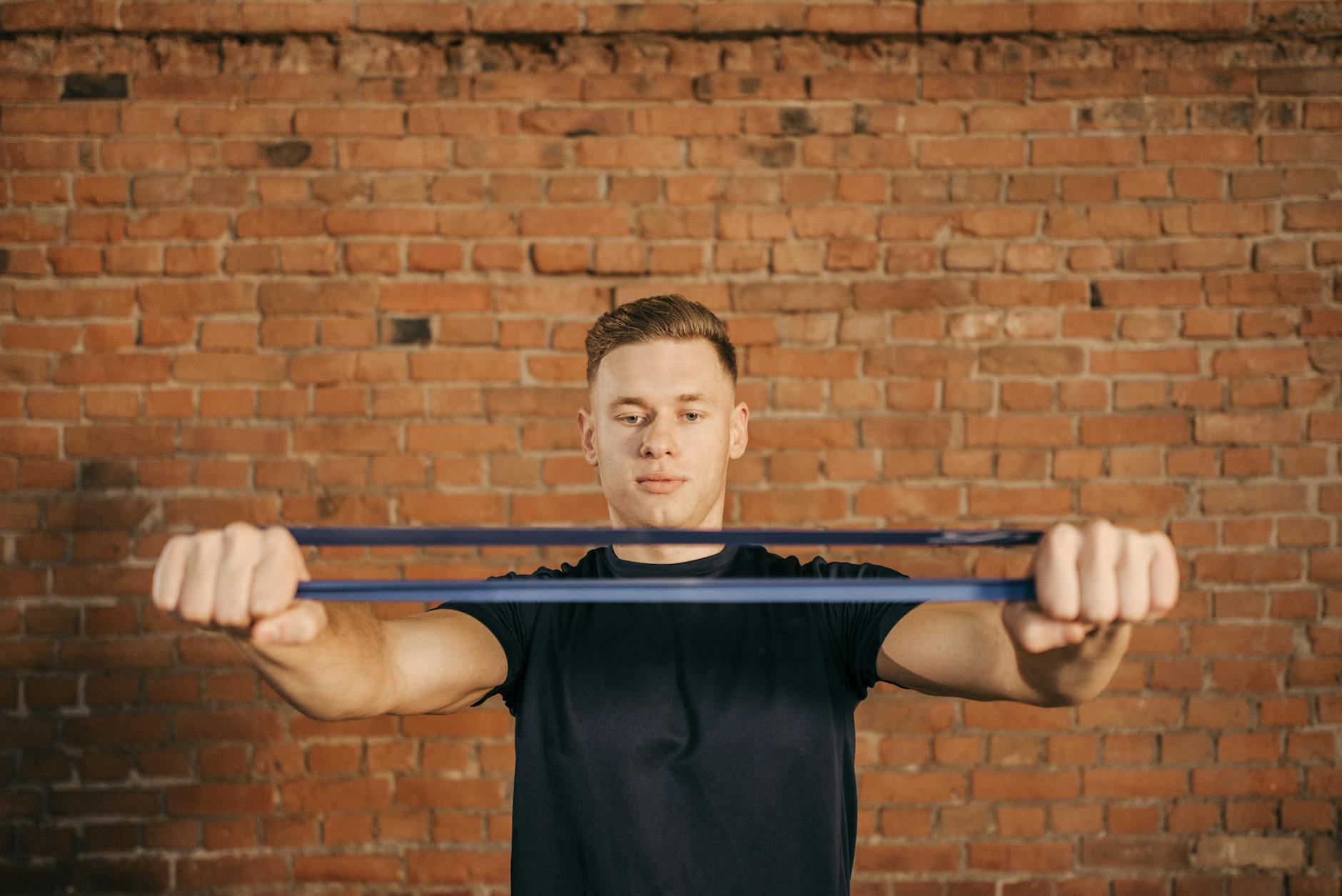
This resistance band workout routine is designed to be done anywhere, with minimal equipment – just a set of loop bands and a set of tube bands with a door anchor. Perform each exercise for 3 sets of 12-15 reps, with 30-60 seconds rest between sets.
- Banded Squats (Loop above knees): Focus on depth and pushing knees out.
- Door-Anchored Chest Press (Tube band): Squeeze the chest at the top.
- Banded Rows (Tube band, anchored low): Pull towards your hips, engage your back.
- Glute Bridges (Loop above knees): Hold the squeeze at the top for a second.
- Overhead Press (Tube band, looped under feet): Press straight up, engaging shoulders.
- Pallof Press (Tube band, anchored at chest height): Resist rotation, brace your core.
- Banded Bicep Curls (Tube band, looped under feet): Keep elbows tucked, control the eccentric.
- Banded Triceps Extensions (Tube band, anchored high or overhead): Isolate the triceps, extend fully.
Why This Routine Works
This routine covers all the major movement patterns: squat, press, pull, hinge, and anti-rotation. It’s balanced, hits both pushing and pulling muscles, and gives special attention to the core and glutes, which are often weak links for many people. It takes me about 30-40 minutes, and I feel thoroughly worked out afterward. The constant tension from the bands truly elevates these simple movements.
Common Mistakes to Avoid (And How to Fix Them)
Even with something as seemingly simple as resistance bands, there are pitfalls. I’ve seen them all, and I’ve made some of them myself. Avoiding these common errors will ensure your resistance band exercises are as effective as possible.
Ignoring Progressive Overload
Just like with weights, you need to challenge your muscles to grow. This is called progressive overload. Many people use the same band, for the same reps, forever. That won’t get you stronger. To fix this, gradually increase the resistance by using a stronger band, increasing your reps or sets, slowing down your tempo, or reducing rest times. Always look for ways to make the exercise a little harder than last time.
Poor Form Over Resistance
This one surprised me when I first started seeing it. People would try to muscle through an exercise with a band that was too strong, leading to terrible form and compensation. The band would control them, instead of the other way around. Always choose a band that allows you to perform the exercise with perfect form for the desired number of repetitions. If you can’t, lighten the resistance. It’s that simple.
Underestimating Their Power
I mentioned this earlier, but it bears repeating: don't underestimate resistance bands. They aren't just for rehabilitation or light toning. With the right approach, proper form, and consistent progressive overload, you can build significant strength and muscle with World Health Organization research on resistance band exercises supporting their efficacy. Think of them as a versatile tool in your arsenal, not a lesser alternative. They are a legitimate form of resistance, capable of challenging even the most seasoned athletes.
So, there you have it. Resistance band exercises are far from a gimmick. They are a powerful, adaptable, and incredibly effective tool for anyone looking to improve their fitness, whether you're a seasoned gym-goer or just taking your first steps towards a healthier lifestyle. Don't let their simplicity fool you. Embrace the versatility, challenge yourself, and watch your body transform. You might just find, like I did, that the most effective gym is the one you can carry in your pocket.