
What if you could wake up tomorrow and feel genuinely, profoundly new? Not just a superficial change, but a deep reset, shedding the accumulated weight of the past year, the worries, the regrets, and stepping into your day with a quiet strength and a clear vision? This isn't a fantasy; it's the potential unlocked by embracing mindfulness for fresh start.
I'll be real with you. For years, I chased external markers of success, believing that a new job title or a bigger paycheck would bring that sense of renewal. It never quite did. The underlying mental clutter, the hamster wheel of anxious thoughts – those followed me everywhere. It wasn't until I started weaving mindfulness into my life, not as a fleeting trend but as a consistent practice, that I truly understood what a fresh start felt like, from the inside out.
The Power of a Mindful Reset
Shedding the Old, Embracing the New
Think about the end of a year, or even just a challenging season. There's a natural inclination to declutter, to purge what's no longer serving us. We do it with our physical spaces – closets get emptied, garages are organized. But what about our minds? Often, we just push through, carrying the same mental baggage into whatever comes next.
This is where mindfulness for fresh start becomes so potent. It’s not about forgetting the past or pretending it didn't happen. Instead, it's about consciously choosing what you carry forward. It's a deliberate act of mental spring cleaning, clearing the cobwebs of old narratives and anxieties so that new possibilities can take root.
Beyond Resolutions: Cultivating a Fresh Start Mindset
We're all familiar with New Year's resolutions, right? They often feel like a race to fix ourselves, fueled by a sense of inadequacy. A fresh start mindset cultivated through mindfulness is different. It’s less about drastic overhauls and more about gentle, consistent shifts in awareness. It’s about building a foundation of presence that supports sustained growth, rather than relying on willpower that inevitably wanes.
I used to think that a fresh start meant completely erasing the past. That felt impossible and frankly, a little scary. The real magic, I discovered, is in understanding that you can integrate lessons learned without being defined by past mistakes. Mindfulness helps you observe those experiences without judgment, extracting wisdom and letting go of the emotional residue.
The Science Behind the Calm
It's not just woo-woo spirituality. There's robust research supporting the benefits of mindfulness. Studies from institutions like the National Institutes of Health research on mindfulness for fresh start show that regular mindfulness practice can lead to significant reductions in stress hormones like cortisol. This is crucial when you're trying to establish new patterns; high stress levels make it incredibly difficult to learn, adapt, and grow.
Furthermore, the ability to focus and regulate emotions, skills honed through mindfulness, are directly linked to better decision-making and improved mental well-being. It’s like upgrading your internal operating system, making it easier to handle whatever life throws your way.

Mindfulness Techniques for Clarity and Renewal
The Breath as Your Anchor
This is the cornerstone of most What is Mindfulness? Discover Its Benefits & Practice practices, and for good reason. Your breath is always with you, a constant, reliable point of return. When your mind is racing with to-do lists or replaying conversations, simply bringing your attention to the sensation of your breath – the rise and fall of your chest, the air entering and leaving your nostrils – can be incredibly grounding.
Try this: for just sixty seconds, focus *only* on your breath. Notice the inhale, the exhale. If your mind wanders (and it will!), gently guide it back to the breath. No judgment. Just a soft redirection. This simple act, repeated throughout the day, is a powerful tool for clearing your mind.
Body Scan Meditation: Reconnecting with Your Physical Self
So much of our mental clutter is tied to physical tension we don't even realize we're holding. A body scan involves systematically bringing your awareness to different parts of your body, noticing any sensations – warmth, coolness, tightness, ease – without trying to change anything.
This practice is fantastic for cultivating mindfulness for clarity. It helps you become more attuned to your body's signals, which can be invaluable for understanding your emotional state. I remember one time, I was feeling inexplicably anxious before a presentation. Doing a quick body scan, I realized my jaw was clenched so tightly it hurt. Simply noticing it and consciously softening the muscles made an immediate difference. It was a tangible reminder that our physical and mental states are deeply intertwined.
Mindful Walking: Bringing Presence to Movement
If sitting still feels like a challenge, try mindful walking. The goal isn't to get somewhere faster, but to be fully present with the experience of walking. Pay attention to the sensation of your feet hitting the ground, the movement of your legs, the swing of your arms. Notice the sights, sounds, and smells around you without getting lost in thought about them.
This is a wonderful way to incorporate mindfulness techniques into your daily routine, especially if you enjoy being outdoors. Consider a Spring Outdoor Exercise Mental Health: Boost Your Mood! session, focusing on the rhythm of your steps and the natural world unfolding around you. It’s a moving meditation that can leave you feeling refreshed and centered.
Mindful Eating: Savoring Every Bite
How often do you eat while distracted – scrolling on your phone, watching TV, or even working? Mindful eating is about bringing your full attention to the experience of eating. Before you take a bite, look at your food. Notice its colors, textures, and smells. Chew slowly, savoring the flavors and the sensation of the food in your mouth. Notice when you feel full.
This practice can transform your relationship with food and also serves as a potent exercise in presence. It’s a surprisingly effective way to practice mindfulness for a fresh start because it teaches you to appreciate the simple, present moment, a skill that ripples out into all areas of your life.
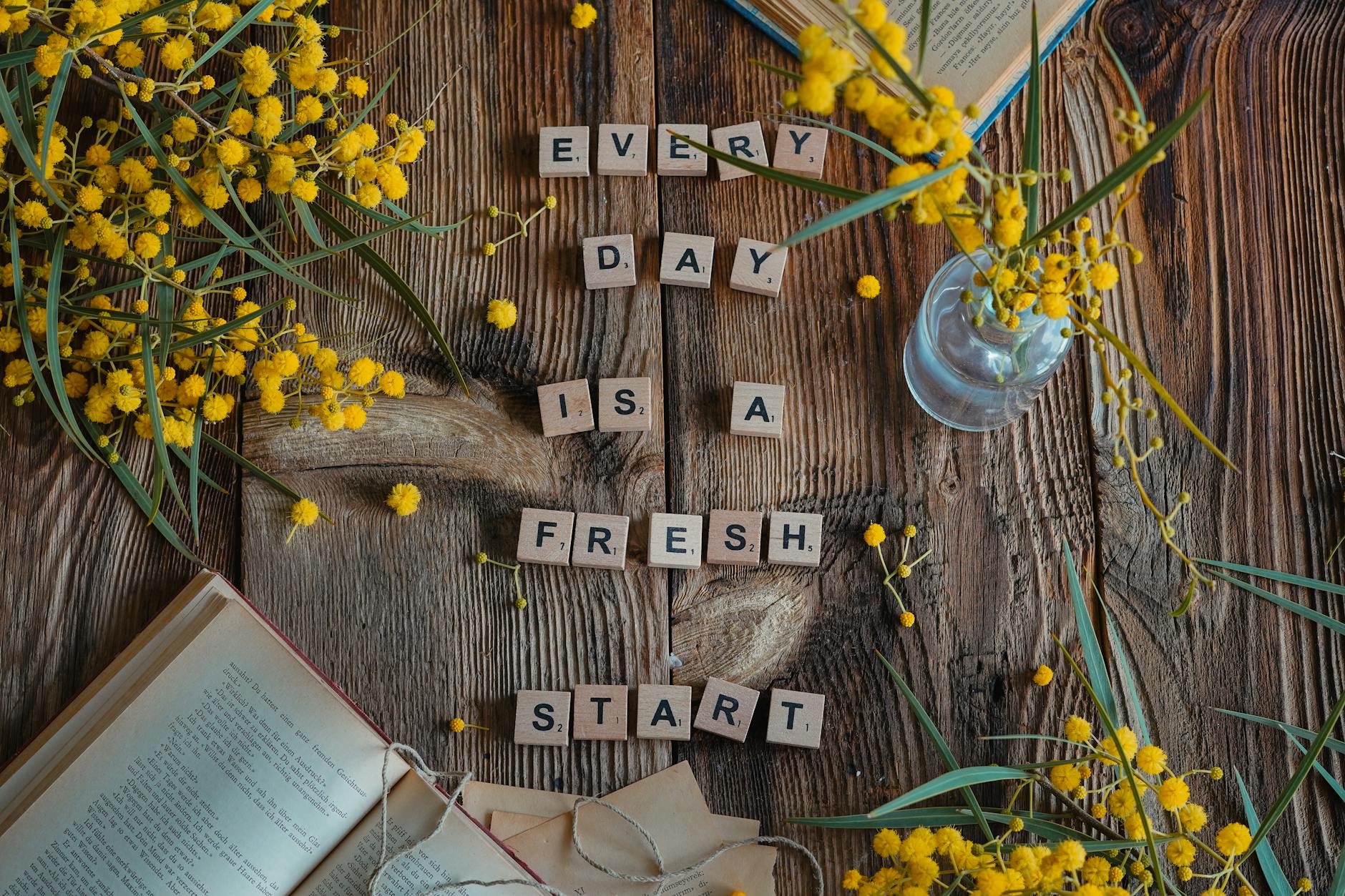
Overcoming Mental Clutter for a Clearer Horizon
Recognizing the Symptoms of Overwhelm
You've probably noticed the signs: a constant feeling of being rushed, difficulty concentrating, irritability, trouble sleeping, or a general sense of unease. This is your mind signaling that it's overloaded. It's like trying to run complex software on a computer that's filled with too many open tabs and temporary files. It slows down, glitches, and eventually crashes.
My own journey with this involved a period where I felt perpetually scattered. I'd start tasks but rarely finish them, my mind flitting from one idea to the next. It was exhausting and deeply frustrating. This feeling of being swamped is a common barrier to achieving that desired fresh start mindset.
The Practice of "Letting Go"
This is arguably the hardest part, but also the most liberating. Mindfulness teaches us to observe our thoughts and emotions without attachment. Instead of getting swept away by a worrying thought, you learn to see it as just that – a thought, a temporary mental event. You can acknowledge it, perhaps even say to yourself, "Ah, there's that worry thought again," and then gently return your focus to your breath or your present activity.
It's not about suppressing thoughts, which is a losing battle. It's about changing your relationship with them. This is a core aspect of mindfulness for clarity – creating space between you and the mental noise.
Setting New Intentions with Awareness
Once you've done some mental spring cleaning, you're in a much better position to set meaningful intentions. Instead of vague resolutions, mindfulness encourages you to set intentions that are aligned with your values and your current needs. What do you *truly* want to cultivate in this next phase of your life?
Take some time to reflect. What qualities do you want to embody? What kind of experiences do you want to create? Write these down. Then, use your mindfulness practice to gently guide your actions and thoughts towards these intentions. For example, if your intention is to be more patient, when you notice yourself feeling impatient, you can use your breath as an anchor and consciously choose a more patient response. This is how you build positive thinking habits from the ground up.
The Role of Self-Compassion
You won't be perfectly mindful every day. There will be times when the old patterns creep back in, or when you feel overwhelmed again. This is where self-compassion becomes your greatest ally. Instead of beating yourself up, treat yourself with the same kindness and understanding you would offer a dear friend who is struggling.
This is a vital component of lasting change and a cornerstone of a true mindfulness for fresh start. Research from the Mayo Clinic research on mindfulness for fresh start highlights the link between self-compassion and resilience. It allows you to learn from setbacks without getting derailed by them.

Building a Sustainable Practice for Lasting Renewal
Starting Small: The Power of Micro-Moments
You don’t need to commit to an hour of meditation every day to experience the benefits. Begin with just a few minutes. Five minutes of focused breathing in the morning, a minute of mindful awareness before a meal, or a brief body scan during a break at work. These small, consistent efforts build momentum.
I often recommend the "three mindful breaths" exercise. Before you check your email, before you make a phone call, before you enter a meeting – just take three conscious breaths. It’s a simple yet effective way to punctuate your day with moments of presence, creating opportunities for mindfulness for clarity.
Integrating Mindfulness into Daily Activities
Mindfulness isn't confined to a meditation cushion. It can be woven into almost any activity. Washing dishes can become a mindful practice by focusing on the feel of the warm water, the scent of the soap, the sensation of cleaning. Brushing your teeth can be an opportunity to notice the taste of the toothpaste and the movement of the brush.
Consider even activities like Gardening for Health: Boost Your Well-being Outdoors. The simple act of tending to plants, feeling the soil, and observing growth can be deeply meditative. These are opportunities for beginner mindfulness exercises that don't require special equipment or dedicated time slots.
Finding Your Tribe and Support Systems
While mindfulness is an individual practice, sharing the journey can be incredibly supportive. Whether it's joining a local meditation group, taking an online course, or simply discussing your experiences with a friend who's also interested in Mental Clarity Tips: Spring Rituals for a Sharper Mind, connection can bolster your commitment.
Knowing others are navigating similar challenges, encountering the same obstacles, and celebrating small victories can make all the difference. It helps combat the feeling of isolation that can sometimes accompany personal growth.
The Long Game: Patience and Persistence
A true mindfulness for fresh start isn't a one-time event; it's a continuous unfolding. There will be days when you feel completely dialed in, and days when it feels like you're back at square one. The key is to approach each day with gentle persistence.
This practice is a marathon, not a sprint. Celebrate the small wins, learn from the days that feel less successful, and trust that the cumulative effect of your efforts will lead to profound and lasting change. The science backs this up; the Centers for Disease Control and Prevention research on mindfulness for fresh start consistently shows that sustained practice yields the most significant benefits in terms of stress reduction techniques and overall mental well-being.
So, what if that new beginning you're yearning for isn't about a dramatic external shift, but an internal one? What if the most powerful fresh start comes from within, cultivated moment by moment, breath by breath? Mindfulness offers you that path. It's not about perfection, but about presence. It's about gently, consistently clearing the space within so that your most vibrant, resilient, and renewed self can finally emerge. The journey starts now, with this single, conscious breath.