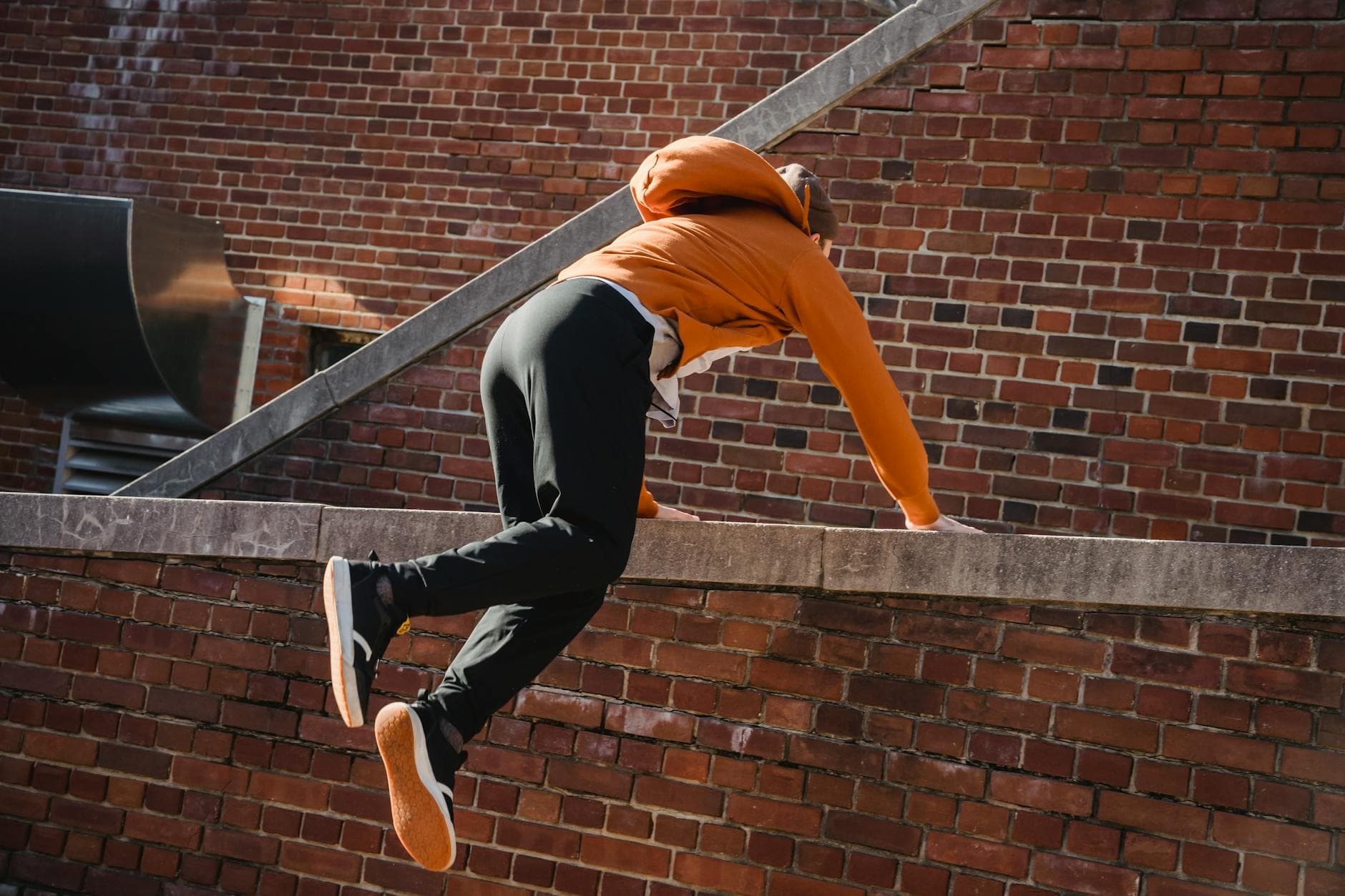
Have you ever watched a film and seen someone leap over a wall with impossible grace, or scale a building like a spider? Did a little voice inside you whisper, "I wish I could do that"? That feeling, that spark of raw, unadulterated freedom, is the heart of free running. And for free running beginners, the journey to unlocking that potential is more accessible than you might think. It’s not about being a superhero; it’s about rediscovering your body's innate capabilities and interacting with your environment in a fundamentally new way.
It’s easy to see free running, or parkour as it's often called, and think it’s only for the impossibly athletic or the downright reckless. I'll be real with you, I used to think that too. I saw the incredible feats and assumed it was a talent you were born with, or something you’d have to dedicate your entire life to training for. But the more I learned, and the more I spoke to people who live and breathe this discipline, the more I realized something truly exciting: the core principles are incredibly foundational, and anyone can start to learn parkour.
The Real Meaning of Free Running for Beginners
Forget the death-defying stunts you see on YouTube for a moment. That's the pinnacle, the advanced expression of years of dedication. For free running beginners, the focus shifts to something far more fundamental: understanding your body, your surroundings, and building a solid base of physical and mental strength. It’s about developing spatial awareness, coordination, and a deep respect for movement.
What Exactly is Free Running?
At its core, free running is about efficient and fluid movement through any environment, overcoming obstacles using a combination of running, jumping, climbing, and vaulting. It’s less about a specific set of moves and more about a philosophy of interacting with the world. Think of it as a conversation between your body and the urban landscape.
Parkour vs. Free Running: What's the Difference?
This is a question that often pops up. While the terms are used interchangeably by many, there's a subtle distinction. Parkour, originating from the French military term "parcours du combattant" (obstacle course), emphasizes efficiency and the direct path from point A to point B, often with a focus on overcoming obstacles with minimal wasted motion. Free running, on the other hand, often incorporates more acrobatic and expressive movements, adding flair and creativity to the traversal. For beginners, the distinction is less important than understanding the shared foundation of movement and discipline.
Why Start Free Running Now?
You might be wondering why you should even consider this. Well, think about the last time you felt truly alive, truly connected to your physical self. Free running offers that in spades. It’s not just about the thrill; it’s about building confidence, improving your overall fitness, and seeing the world through a new lens. It can be an incredibly empowering discipline for anyone looking to get started.

Building Your Foundation: The Essential Beginner Parkour Training
This is where the magic begins for free running beginners. It’s not about jumping off buildings on day one. It’s about building a robust physical foundation that will support your progression and, crucially, keep you safe. This is the bedrock of all good parkour training.
Strength Training: The Unsung Hero
You can’t leap like a gazelle if your legs can’t support you, and you can’t vault a wall if your upper body is weak. Basic strength training is non-negotiable. This doesn't mean you need to spend hours in a gym. Bodyweight exercises are your best friend here.
Squats and Lunges for Leg Power
Focus on mastering the squat and the lunge. These are fundamental to building the explosive leg strength needed for jumps and landings. Aim for good form over high reps initially. Think controlled movements, feeling the muscles work.
Push-ups and Pull-ups for Upper Body
Push-ups build chest, shoulder, and triceps strength, essential for pushing off surfaces and stabilizing yourself. Pull-ups (or assisted pull-ups if you're not there yet) are crucial for climbing and getting over obstacles.
Balance and Coordination: Finding Your Center
Free running is as much about balance as it is about power. You need to be able to control your body in dynamic situations.
Walking the Line
Find a curb or a low, sturdy beam. Practice walking back and forth, focusing on keeping your balance. Gradually increase the difficulty by walking faster, turning, or even taking small hops.
Precision Jumps
Start with small, controlled jumps. Aim to land precisely on a designated spot – a chalk mark on the ground, a brick. This trains your proprioception and your ability to judge distances.
Mobility and Flexibility: Moving Freely
Tight muscles are a recipe for injury. You need to be able to move through a full range of motion.
Dynamic Stretching
Before any training session, incorporate dynamic stretches like leg swings, arm circles, and torso twists. These prepare your muscles for movement.
Static Stretching Post-Workout
After your training, hold static stretches for longer periods to improve flexibility. Focus on hamstrings, quads, hips, and shoulders.

Mastering the Parkour Basics: Your First Movements
Once you have a foundational level of fitness, you can start introducing some of the core parkour movements. Remember, always progress slowly and with a focus on safety.
Landing Safely: The Most Important Skill
This cannot be stressed enough. Learning to absorb impact is paramount. A proper landing involves bending your knees and hips, using your legs as shock absorbers, and rolling if necessary to dissipate energy.
The Box Jump and Controlled Descent
Start with low, stable boxes or platforms. Practice jumping onto them, landing softly, and then stepping or jumping down in a controlled manner. Focus on the landing technique every single time.
The Roll: Dissipating Energy
The roll is a crucial technique for safely absorbing larger impacts, like from a jump. It involves tucking your chin to your chest and rolling diagonally across your back and shoulder, distributing the force. Practice this on soft surfaces like grass or mats until it becomes second nature.
Vaulting Techniques: Getting Over Obstacles
Vaults are about efficiently clearing an obstacle. There are many variations, but for beginners, starting with simpler ones is key.
The Safety Vault
This is the most basic vault and a fantastic starting point. Place one hand on the obstacle, swing your legs through, and bring your other leg over, followed by your body. It’s a controlled, step-by-step process.
The Speed Vault
Once you're comfortable with the safety vault, you can work towards the speed vault, which is a more fluid, one-handed vault where you push off with your hand and swing your legs through in one motion.
Wall Runs and Climbs: Ascending with Confidence
These movements are about utilizing vertical surfaces.
The Wall Run (Assisted)
Start with a low wall. Practice running towards it and placing a hand on the wall for a slight push, then stepping over. As you get stronger and more confident, you can gradually increase the height and reduce the reliance on your hands.
Basic Wall Climb
For very low walls, a simple climb-up might suffice. Focus on using your legs to push off the ground and your arms to pull yourself up.

Safety First: Essential Considerations for Free Running Beginners
I cannot emphasize this enough: safety is not an optional extra in free running; it’s the foundation. Without it, your journey will be short-lived and potentially painful.
Know Your Limits and Progress Gradually
This is where many people go wrong. They see an impressive feat and try to replicate it without the necessary conditioning or technique. Always listen to your body. If something feels too difficult or unsafe, don't do it. Gradual progression is the key to long-term success and injury prevention.
Proper Warm-up and Cool-down Routine
As mentioned earlier, a thorough warm-up prepares your body for the stresses of movement, and a cool-down helps your muscles recover. Don't skip these vital steps. It's like trying to drive a race car without checking the tires – a recipe for disaster.
Environmental Awareness: Reading the Terrain
Before you even think about a movement, assess your surroundings. Is the surface stable? Is there anything sharp or slippery? Understanding your environment is a critical aspect of parkour safety. This is where you develop your "situational awareness."
Finding a Community or Mentor
Learning from experienced practitioners is invaluable. They can spot bad habits before they become ingrained and offer guidance that you simply can't get from a video. Look for local parkour groups or gyms that offer classes. The Centers for Disease Control and Prevention research on free running beginners often highlights the importance of structured, supervised training.
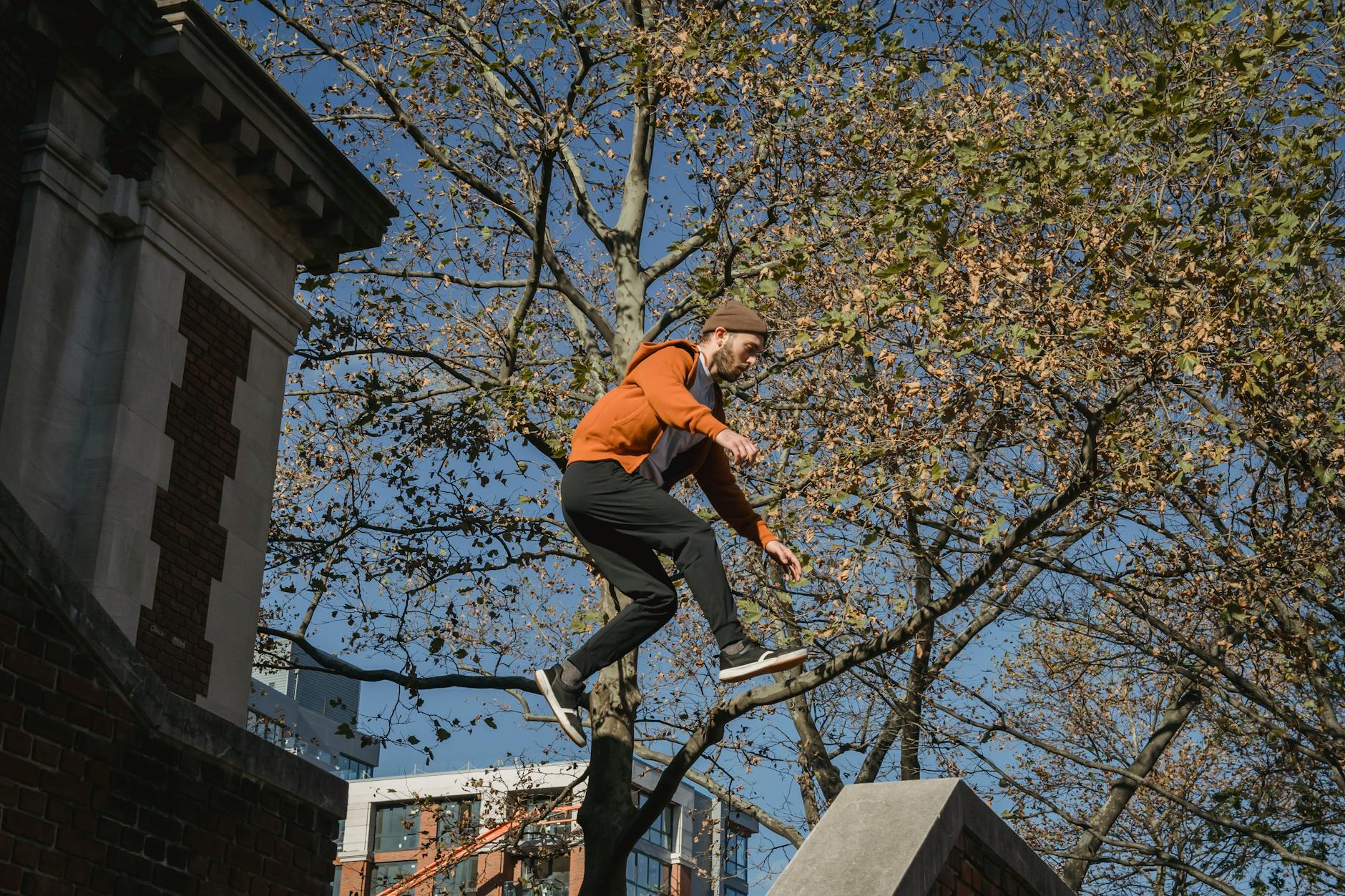
Beyond the Basics: Developing Your Free Running Journey
Once you've got a handle on the fundamentals, the world opens up. This is where you start to truly embody the spirit of free running.
Building Strength for Urban Running
The demands of urban running and free running are surprisingly similar – agility, stamina, and the ability to react quickly. Incorporating regular cardio, like cardio for women or a general fitness routine that includes activities like women's gym workout, can significantly enhance your free running capabilities. Even a home fat burning workout can build a solid base.
Mental Fortitude: Overcoming Fear and Doubt
Free running is as much a mental discipline as it is physical. You will encounter fear. Learning to manage it, to break down challenges into smaller, manageable steps, and to trust your training is crucial. This mental resilience translates to other areas of life too. The National Institutes of Health research on free running beginners often points to the psychological benefits of overcoming perceived limitations.
Creative Expression: Finding Your Style
As you become more proficient, you'll naturally start to develop your own unique style. You’ll find certain movements feel more natural to you, and you’ll begin to string together sequences in ways that are both efficient and aesthetically pleasing. This is where the "free" in free running truly comes alive.
The Long-Term Benefits: More Than Just Movement
The impact of embracing free running extends far beyond the physical. You'll develop a heightened sense of self-awareness, a greater appreciation for your physical capabilities, and a problem-solving mindset that can be applied to any challenge. It’s a practice that continuously teaches you about yourself and your potential. The National Institutes of Health research on free running beginners has explored these wider benefits.
So, if you’ve ever felt that pull, that desire to move with more freedom and purpose, don't let the perceived difficulty deter you. Start with the basics, prioritize safety, and embrace the process. The world is an obstacle course waiting for you to explore it, and the journey of free running beginners is an incredibly rewarding one. It’s about rediscovering the joy of pure, uninhibited movement.